Supplements I’m Taking Whilst Vegan & Pregnant.

I can’t believe I’m 29- about to be 30 weeks pregnant, can you? Where is the time going?? I blink and another week has flown right by.


Between working full time, sleeping and trying to organize life to accommodate a soon to be very real baby on the weekends, I have had little to no time at all to blog about anything I’ve really wanted to, let alone keep you updated on preggo life!


As most pregnant women do, however, I’ve been regularly taking vitamins to help support my body whilst it grows another human. I spent hours searching for vegan-friendly prenatal capsules, reading reviews and weighing the cost per capsule before I finally made my choices.

In the end I decided on an algae oil based omega 3 from the brand Testa, and a Prenatal multivitamin from Terra Nova. These seemed like the best value to me for vegan, high-quality vitamins. Some of the prices for vitamins are shocking with 30-60 caps sometimes for over £30! I get that they have everything in them and are organic etc, but seriously, if you have to take two a day that’s not a lot for your money.

The Terra Nova Prenatal Multivitamins are £20.50 for 100 capsules. Taking two capsules a day obviously lasts me 50 days, though with the odd forgotten day here and there a bottle has lasted me two months and works out at 41p per two capsules/day.


What I like about these capsules is that they contain folate instead of folic acid. Folate (Vitamin B9) is the naturally occurring form of synthetically produced Folic Acid. Converting synthetic folic acid into the active form of Vitamin B9 is a much slower and less efficient process for the body, which can lead to un-metabolized folic acid hanging around the bloodstream leading to health problems. The body can handle folate much easier than folic acid, converting it quickly into B9 in the digestive system before it enters the bloodstream.

The capsules also contain the natural, most bio-available version of B12, methylcobalamin, as opposed to commonly used cyanocobalamin, which the body has to convert to methylcobalamin and discard of the cyano-compound (cyanide molecule!) anyway before it can be used. Plus, there’s vegan vitamin D3 and iodine!

Whilst vitamins are no replacement for a healthy diet and lifestyle, I have felt better taking these daily, my energy levels have been good and I haven’t experienced any huge negatives with pregnancy other than the odd ache and pain so far. My skin has been a solid 8/10 and my nails are so strong they’re practically weapons. I also have peace of mind that I’m still getting some good nutrients into my body for the baby whilst I’m eating pizza and ice cream for the second time that week.

TWO VEGETARIAN CAPSULES TYPICALLY PROVIDE:


MAGNIFOOD COMPLEX 350mg PROVIDING:


Kale (fresh freeze dried – ORGANIC) 100mg, Blackberry Fruit (fresh freeze dried) 50mg, Bilberry Fruit (fresh freeze dried) 50mg, Pumpkin Seed 50mg, Stabilized Rice Bran 50mg, Beetroot Juice & Greens (fresh freeze dried – ORGANIC) 25mg, Spinach (fresh freeze dried – ORGANIC)

25mg Calcium (as carbonate, citrate, ascorbate) 100mg


Vitamin C (as Ca, Mg, Zn ascorbate) 60mg


Magnesium (as oxide, citrate, ascorbate) 50mg


Vitamin E (d-alpha tocopheryl succinate – 30iu) 20mg


Citrus Bioflavonoids 20mg


DHA (docosahexaenoic acid – vegetarian) 15mg


Iron (as bisglycinate) 15mg


Niacin (as niacinamide) 15mg


Zinc (as ascorbate) 10mg


Pantothenic Acid (as calcium pantothenate) 5mg


Vitamin B6 (as pyridoxine hydrochloride) 5mg


Choline (as bitartrate) 5mg


Inositol 5mg


Vitamin B1 (as thiamin mononitrate) 3mg


Vitamin B2 (riboflavin) 3mg


Natural Beta Carotene/Mixed Carotenoids 2mg


Copper (as gluconate) 1mg


Manganese (as bisglycinate) 0.5mg


Folate (as calcium L-methylfolate) 400ug


Biotin (as prep.) 150ug


Iodine (as potassium iodide) 100ug


Selenium (as selenomethionine) 25ug


Chromium (as picolinate) 20ug


Vitamin D3 (vegan cholecalciferol [from lichen] – 400iu) 10ug


Vitamin B12 (as methylcobalamin) 5ug
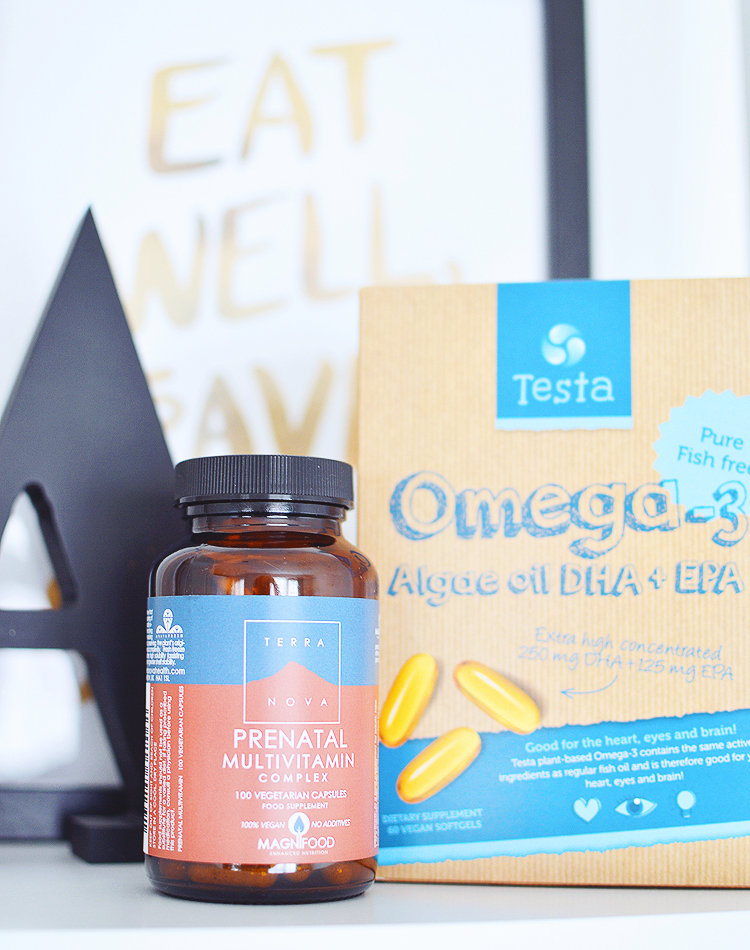
Whilst taking an omega 3 supplement seems to not be a necessity for pregnancy, DHA is important for brain and vision developments, so I wanted to take this as an added extra. Especially as I don’t find myself eating a lot of chia pudding or flax seeds to get lots of omega 3!

The Testa Omega 3 capsules are £16.90 for 60 capsules, but unlike most variations, you only need 1 capsule per day, which works out at 28p per day over the two months. The downside is that the capsules are large (not massive, but pretty chunky!) so if this is an issue for you, you may need to look for other brands where you take two smaller capsules per day for the same dose.

Each capsule contains 250mg DHA and 125mg EPA for healthy heart, eye and brain development, there is no fishy taste or smell at all and I’m sure they’re contributing to my skin improvements and general wellbeing, which isn’t their purpose but an added bonus!

Ingredients:


Algae oil (Schizochytrium sp.), glycerol, modified corn starch*, high oleic sunflower oil, carrageenan, rosemary extract, anti-oxidants (tocopherols and ascorbyl palmitate) and acidity regulator (sodium carbonate). 

Testa Omega-3 uses absolutely no genetically engineered ingredients, no preservatives, and no sweeteners, flavours or colours. *’Modified’ Corn Starch only means the corn starch is ‘modified’, not to confuse with ‘Genetically Modified’. For the corn starch, it means it’s heated so it gets binding properties, which is required for the capsule shell.

For 69p a day, I’m happy with my choices and will continue to take these after pregnancy too, to support breastfeeding and passing on extra nutrients to baby – if all goes well! That’s something I’m very nervous about as I don’t like the idea of cows milk or even a vegan soya formula much. Fingers crossed everything works as it should!


LASplash Glitter Review

I have a really fun review for you all today. With New Years quickly approaching, many of you will choose to use glitter to adorn your eyes to ring in 2013. Today I wanted to share with you some new glitters that I have been using and I absolutely love. These are very inexpensive and can be found at your local drugstores as well as some Ulta’s and the Makeup Geek Store. You get 2 grams of product in every container which will last quite a while. Each one comes with a sifter which I remove to easily access the glitter. I like that each of these are very finely milled which makes them easy to apply. They come in 18 vibrant shades to choose from and at only $8.99 they are half the price of MAC glitters.

I highly recommend these not only because of the great price, but the quality as well. They are very highly pigmented and come in a great color range. These are easy to find at most local drugstores and in the Makeup Geek store as well.

Unclotting Vitamin K

January 30, 2013 by Cassy

01

We’re looking at some new multivitamin products at work, and since my last post on Vitamin D, I was wondering what other vitamins I’m missing from my daily diet.  So everyone’s heard of Vitamin A, B, C, D, and E but what’s up with Vitamin K and why did we skip Vitamin F, G, H, and I?  The answer:  a German scientist who discovered this vitamin named it K because of its primary property in blood clotting (or “Koagulation” in German).

Where to Get Vitamin K

Naturally occurring Vitamin K (phylloquinone) comes from foods like green, leafy vegetables and green tea.  Some of my favorite products that are high in Vitamin K are:

  1. Broccoli
  2. Spinach
  3. Kale
  4. Romaine Lettuce
  5. Parsley
  6. Brussel Sprouts (New for me! I just discovered this while at a restaurant last Friday.  I never thought I could like this vegetable.)
  7. Collard Greens (so good!)
  8. Cucumber
  9. Tomato
  10. Blueberry

The other form (menaquinones) comes from bacteria in the gut (yes, healthy bacteria lives in our intestines).  Bacteria in the gut produce a range of vitamin K2 forms, each with side chains composed of a variable number of chemical compounds.  Menaquinones can also be found in food that contains bacteria like cheese and natto, or in animals that also produce the vitamin via their gut bacteria.

Benefits

Essentially, Vitamin K plays a key role in regulating blood coagulation and bleeding. In addition to the anticoagulant properties, Vitamin K has shown heart-health benefits. Researchers have observed an inverse association between menoquinones and risk of cardiovascular diseases.

It also helps support strong bones. Vitamin K assists calcium retention, which helps prevent osteoporosis.  In postmenopausal women, menoquinones help maintain bone strength in the neck and hip.

Vitamin K has also shown to protect against prostate and liver cancer. A 2008 German study found a dietary intake of menaquinones lead to a 35-percent reduction in prostate cancer risk in more than 11,000 men.

Overall, one study on vitamin K published in October the 2009 issue of the American Journal of Clinical Nutrition found it may help prevent age-related conditions such as bone fragility, arterial and kidney calcification, cardiovascular disease and, possibly, cancer.


Category: Nutrition

| Tags: Coagulation, Health, Nutrition, Vitamin K

Vitamin D Deficiency

January 8, 2013 by Cassy

So I got my lab test back from my annual checkup with my doctor, and I thought everything turned out okay…except it wasn’t.  My Vitamin D level was below the specified range (30-100), so naturally I Googled everything there is to know about Vitamin D.

How to Get More Vitamin D

01

  1. Go outside between the hours of 10am-2pm.  This is the cheapest (it’s FREE) and easiest way of taking in extra Vitamin D.  If you’re working indoors with no exposed windows (like me), take a break outside or walk during your lunch hour.  Asians are deathly afraid of the sun, but like plants we need sunlight to keep us healthy.  However, you need to take things in moderation and only stay out in the sun long enough to have your skin turn the lightest shade of pink. This may only be a few minutes for those who have very pale skin.  You can get 30% of your Vitamin D from just being outside.  Additionally, Vitamin D can help prevent cancer (see this article).  It is very difficult to get enough vitamin D from food sources alone, as very few foods naturally contain vitamin D, and those that do will not contain enough to optimize your levels.
  2. Take Vitamin D supplements.  The Food and Nutrition Board recommends the daily intake of 600 IU for children and adults up to 70 years old, and 800 IU if you’re older.  There are different forms of Vitamin D you can take:
    • Vitamin D3 (cholecalciferol) is the type of vitamin D the body naturally produces in the skin in response to sun exposure.  Cholecalciferol is 87% more potent in raising and maintaining vitamin D concentrations and produces 2- to 3-fold greater storage than does D2.  However, Vitamin D3 supplements are not vegetarian and are not likely to be derived from American products. If an individual has ethical concerns over D3, D2 can be an effective replacement.
    • Vitamin D2 (ergocalciferol) comes from fungi and plants grown through UV lights.  Good vegan substitution for your Vitamin D supplement needs.  Some studies showed that ergocalciferol is comparable to cholecalciferol.
  • Eat foods high in Vitamin D.  Vitamin D is oil soluble, which means you need fat to dissolve it.  You also still need to take 600 IU of Vitamin D.
    • Cod Liver Oil – not vegan (duh), but it’s a popular food product that is high in Vitamin A and D.  It also has 1000 IU per 100g serving.
    • Fortified Cereal – vegan, but not always gluten-free.  Check the labels to make sure it doesn’t contain any processed sugar and hydrogenated oil.  Cereals can provide over 3000 IU per 100g serving (2 cups).
    • Fish like herring, salmon, mackerel, tuna, and your basic sushi meal.  Raw fish is better than cooked fish, and canned fish in oil is better than canned fish in water.  This is a great way for pescaterian to get their Vitamin D, but not so much for vegans/vegetarians.  IUs depend on the type of fish, but herring has the most at over 1500 IU per 100g serving.
    • Other seafood like oysters and caviar.  These provide 1/3 to 1/2 of your daily IU recommendation, with raw oysters at 320 IU per 100g (269 at 6 oysters), and caviar at 230 IU per 100g.
    • Fortified tofu and soymilk.  Vegan and gluten-free.  Fortified Tofu can provide up to 157 IU per 100g serving (44 IU per ounce). Fortified Soy Milk can provide up to 49IU per 100g serving (119 IU per cup). Amounts of vitamin D vary widely between products, so be sure to check nutrition facts for vitamin D content.
    • Salami, Ham, Sausages can be taken in moderation since they are high in sodium and cholesterol.  They provide a little Vitamin D, averaging about 9% of your 600 IU per 100g serving.
    • Eggs, Cheese, Butter and Milk are good source of protein and calcium, but Vitamin D levels tend to be less than 100 IU per 100g serving.
    • Mushrooms, especially white button mushrooms provide 27 IU per 100g serving.
  • So the bottom line is that people are not taking enough Vitamin to protect their health.  While people can make vitamin D from the sun, getting too much sun increases the risk of skin cancer, so it’s not always the best way to get vitamin D.  By comparison, Vitamin D supplements of 800 to 1,000 IU per day are fairly inexpensive and safe and provide a reasonable approach to avoiding Vitamin D deficiency.


    Category: Nutrition

    | Tags: Cholecalciferol, Food, Health, Vitamin D, vitamin d2 ergocalciferol, vitamin d3 cholecalciferol

    Ingredients for Better Joint Health

    December 18, 2012 by Cassy

    slide_234534_1142350_free

    I know what you’re thinking…you’re too young to worry about arthritis and overall joint health.  However, most people are not getting enough nutrients and vitamins in their bodies to protect themselves from the normal wear and tear signs of aging.  I’m already feeling achy when it rains, and it’s been raining quite often here in California.  Anyway, there are a couple of ingredients that can help you manage your joint health, and they vary in their targeted functions and time for realizing benefits.

    The first is omega-3 fatty acids.  I take omega-3 pills daily because even though you think eating fish once or twice a week is enough, it’s not.  The chains in the omega-3 fatty acids, DHA (docosahexaenoic acid) and EPA (eicosapentaenoic acid), help with inflammatory issues.  Without going into too much chemistry details, these chains compete with arachadonic acid to convert enzymes that produce cytokines, which regulate the inflammation in your body.  So while the arachadonic acid makes you more inflammed, EPA and DHA help in the anti-inflammatory benefits.  DHA and EPA are commonly found in fish oil and krill oil.  If you’re vegan/vegetarian, you can get these from flax seeds.  However, with flax seeds, you’re getting ALA (alpha-linolenic acid) which is converted efficiently in your body to EPA and DHA.

    You can also get joint relief from ingredients like boswellia (a tree) extract, curcumin (found in turmeric), and hops and pine extracts.  These ingredient help reduce joint pain, and you can find pills with these key ingredients at your natural product stores.


    Category: Nutrition

    | Tags: Alpha-Linolenic acid, Docosahexaenoic acid, Eicosapentaenoic acid, Flax, Health, Inflammation, joint health, omega 3 fatty acids, Omega-3 fatty acid